Posts

Showing posts with the label gregory wrightstone

Lucy Biggers' Speed Round on Climate

Image
Lucy Biggers appears to be the next up-and-coming influencer in the climate space. She presents herself as a former a climate activist suffered from extreme anxiety over climate, and so she advocated for policies and viewed other activists like Greta Thunberg as her hero. However, she says she was uninformed about the scientific evidence supporting her "doomer" anxiety. Then she read a couple books by Shellenberger and Koonin that caused her to stop being a climate activist, and now she is employed by the Free Press to share her newly found liberation from doomerism with the world. In reality she never stopped being a climate activist; she just changed her politics. Her appeal to her viewers appears to be that she (unlike many of her thought leaders) usually doesn't pretend to be an expert in science or policy. Instead, her approach appears to be that since she converted from doomerism to contrarianism, she has cured herself of her anxiety .[5] She was once filled with cl...
No, All Plantlife Doesn't Die at 150 ppm CO2

Image
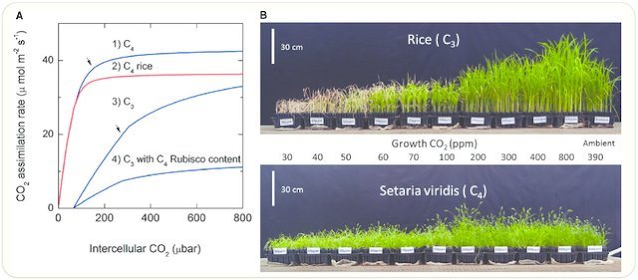
Frequently I'm told that the increase in CO2 from fossil fuel emissions is good for the planet because, before the industrial revolution, CO2 levels were dangerously low. Gregory Wrightstone, for instance, claims that "before we began adding CO2 to the atmosphere, we weren’t sure that we wouldn’t cross that critical 150-ppm threshold during the next glacial period" when nearly all "terrestrial plant life cannot exist." According to him, "advanced plant life could not survive without at least 150 ppm" CO2. He calls this a "line of death." [1] I've even read people claiming that currently the atmosphere is "starved" of CO2. It's hard to know where this 150 ppm value originates; I haven't been been able to find it anywhere in the scientific literature, but I did read once that in greenhouses, daytime photosynthesis can lower CO2 concentrations to about 150 ppm. However, that does not justify any conclusion that plants canno...

Review of Inconvenient Facts, Part 2 - Temperature

Image
Pages 2K Reconstruction of Global Temperatures Replicating MBH98/99 In a previous post , I wrote an initial review of Gregory Wrightstone's Book, Inconvenient Facts. We began to see that Mr. Wrightstone's book was pretty low on facts and high on convenience - that is, Wrightstone's claims would be very convenient for us if we believe him, since if there is no problem, we have no compelling reason to fix a non-existent problem. That post covered only the first two chapters of his book. Chapter 3 is supposed to contain more inconvenient facts about temperature, but what we get is a lot of misinformation about temperature based on 1) the rejection of scientific evidence about temperature and 2) the confusion of global temperatures with local temperatures, including 2a) Central England and 2b) the Greenland summit, and 3) the misuse of a terrible proxy reconstruction. Confusion About Proxies Mr. Wrightstone (somewhat) correctly observes that, if global (or Northern Hemisphere)...

Misuse of the GISP2 Ice Core

Image
Central Greenland Temperature Reconstruction In 2000, R. B. Alley published the results of a proxy analysis of a single ice core in Central Greenland as part of the GISP2 project.[1] The resulting time series reconstructs local temperature fluctuations over the last 50,000 years. The graph above includes only the last 15,000 years; you may see versions of this graph showing the last 10,000 or 12,000 years. The proxy reconstructs temperatures at the Greenland Summit (the GISP2 project) using the ratio of two different oxygen isotopes: 18O and the more abundant 16O. Lower the 18O/16O ratio indicates lowers temperatures, since as temperatures decrease, a more 18O precipitates out at lower latitudes, making the 18O/16O ratio smaller over Greenland. Alley's time series ends 95 years BP, or 95 years before 1950, so the last data point in this analysis is 1855. The IPCC and other organizations are interested in modern warming frequently consider modern warming as measured against the 1850...